
Explaining foam jargon
Do you ever struggle to understand your packaging designer, or find yourself bogged down by all the technical terms that surround foam packaging? Well, you’re not alone!
Whilst there are occasions where, unfortunately, there is no alternative to a technical term or phrase, certain amounts of jargon can definitely be avoided.
In this guide, we’ll cover a huge range of packaging terms that surround foam packaging that you can use to boost your own knowledge and gain a better understanding of the world of foam packaging.
A
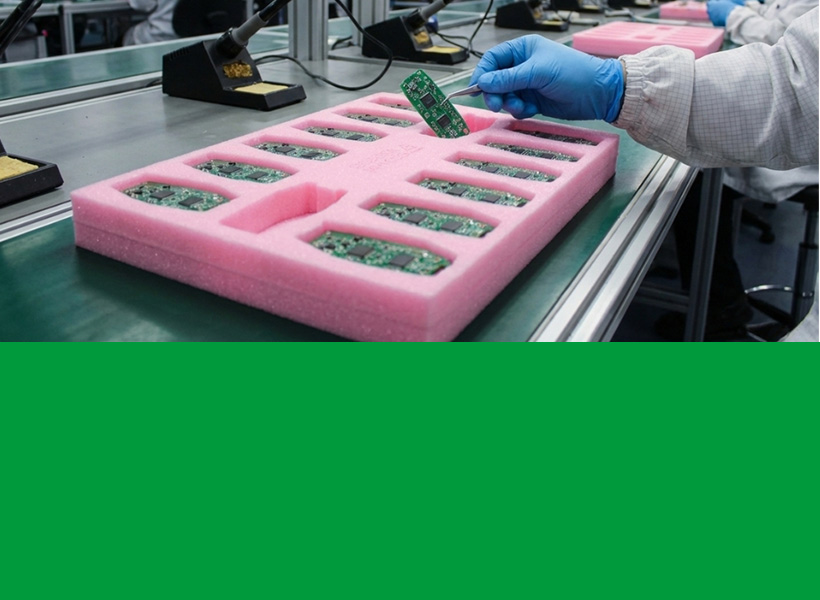
Anti-static foam: Foam that is designed to prevent electrostatic discharge (ESD), protecting sensitive electronics during handling and transit.
ARPLANK: A lightweight, closed-cell bead foam with excellent multi-impact protection and consistent strength in all directions.
Azote®: A brand of high-performance closed-cell cross-linked polyolefin foams, commonly used in protective components due to its strength and chemical resistance.
B
Butt welding: A process used to join foam sections together to create larger sheets or blocks for further conversion.
Blowing agents: Chemicals that create the foam’s cellular structure, controlling its density and cushioning properties.
Buns: Large blocks of foam produced during manufacturing that are later cut, shaped or converted into finished packaging products.
Buoyancy: The ability of a material to float in water, making certain foams suitable for marine, flotation and water sports applications.
C
Cell structure: The internal makeup of foam (open or closed cells) that determines its strength, cushioning, and moisture resistance.
Chamfering: Cutting angled edges into foam to improve product fit, reduce damage, and create a clean finish.
Chemically inert: Foam that does not react with or contaminate the products it protects.
Closed-cell: A dense foam with sealed cells that resist water and provide strong cushioning and durability.
CNC routing: A computer-controlled process used to cut precise shapes and cavities into foam for custom inserts. (Also referred to as machining).
Contouring: Shaping foam to match the exact form of a product for a secure and protective fit. (Also referred to as profiling).
Cross-linked: A type of foam structure that increases strength, durability, and resistance to chemicals and wear.
Catalysts: Chemicals that speed up the foam-making reaction and control curing.
Chain extenders: Additives that improve the strength, durability and performance of polyurethane foam.
CFCs (Chlorofluorocarbons): Chemicals once used as blowing agents in foam production but now largely phased out due to their harmful effect on the ozone layer.
D
Debossing: Pressing a design into foam to create a recessed logo or surface detail.
Density: The measure of how compact foam is, affecting its strength, weight, and protective performance.
Die-cutting: A fast, repeatable method of cutting foam into specific shapes using custom tools.
Dunnage: Foam used to fill empty space and secure products during transit.
Diisocyanates: A key ingredient in polyurethane foam production, reacting with polyols to form the foam.
E
F
Flame retardant: Foam treated to reduce flammability and slow the spread of fire.
Foam blocks: Solid foam pieces used for structural support, insulation, or cushioning.
Foam conversion: The process of cutting, shaping, and assembling foam into custom packaging solutions.
Foam dividers: Foam sections used to separate and protect multiple items within a package.
Foam end caps: Custom foam pieces fitted to product ends and corners to absorb impact and suspend items within packaging.
I
Isotropic blocks: Foam that provides equal strength and protection in all directions.
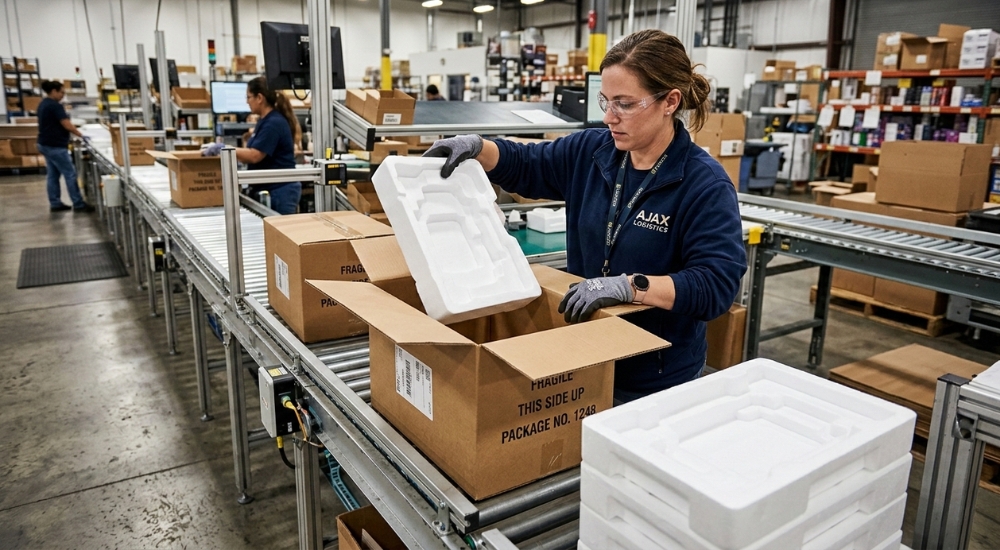
Inserts: Custom-cut foam designed to hold and protect products inside boxes or cases.
Isothermal: Describes packaging designed to maintain a consistent temperature, commonly used for food, pharmaceuticals, and medical products.
L
Lamination: Bonding layers of foam or combining foam with other materials to improve performance.
Laser marking: Using a laser to add permanent branding or markings to foam surfaces. (Also known as embossing).
M
Machining: A computer-controlled process used to cut precise shapes and cavities into foam or custom inserts. (Also referred to as CNC routing).
Moulding: Shaping heated foam into custom forms using moulds. (Also known as thermoforming).
MOQs (Minimum Order Quantities): The smallest number of units a manufacturer or supplier is willing to produce or sell in one order.
N
Nylon: A high-performance foam with excellent temperature and chemical resistance. (Also known as polyamide foam).
O
Open-cell: A soft, flexible foam with interconnected cells, ideal for cushioning and surface protection.
P
Plastazote: A strong, cross-linked polyethylene foam commonly used for high-quality protective inserts.
Polyethylene (PE): A durable, closed-cell foam widely used for lightweight, water-resistant protective packaging.
Polyurethane (PU): A flexible foam typically used for cushioning and protective packaging solutions.
Profile cutting: Cutting foam into precise shapes or contours for protective or presentation purposes.
Polyamide foam: A high-performance foam with excellent temperature and chemical resistance. (Also known as Nylon).
Polyols: One of the two main ingredients used to produce polyurethane (PU) foam, providing flexibility and cushioning.
Polymer: The base materials used to make many packaging products, including plastics and protective foams.
Pick and pluck: Pre-scored foam inserts with removable cubes, allowing users to create custom compartments without machining.
Polypropylene (PP): A lightweight, durable plastic widely used for reusable packaging, containers and protective components due to its strength and chemical resistance.
Polyolefin: A family of plastics, including polyethylene and polypropylene, commonly used in packaging for their durability, flexibility and chemical resistance.
S
Sealed Air: A global packaging company known for protective materials like bubble wrap.
Shock absorption: The ability of foam to absorb and disperse impact energy, protecting products from damage.
Splitting: Cutting foam blocks into thinner sheets with consistent thickness. (Also known as skiving).
Stratocell: A lightweight polyethylene foam used for durable, high-performance packaging applications.
Shadowboards: Layered foam inserts used to organise tools and highlight missing items. (Also known as tool control foam).
T
Thermal insulation: Foam’s ability to reduce heat transfer and protect temperature-sensitive products.
Thermoforming: Shaping heated foam into custom forms used as moulds. (Also known as moulding).
Tool control foam: Layered foam inserts used to organise tools and highlight missing items. (Also known as shadowboards).
V
VOCs (Volatile Organic Compounds): Organic chemicals that can be released as gases during manufacturing or from certain materials, with low-VOC products preferred for environmental and indoor air quality reasons.
W
Waterjet cutting: A precise method of cutting foam using high-pressure water without heat.
Z
Summary
If you’d like to discuss any aspect of your packaging supply or see how Polyformes can help you reduce your packaging costs, then please do not hesitate to contact our team of experts today.