
Introduction
Foam recycling is becoming an increasingly important consideration for businesses looking to reduce waste and improve the sustainability of their packaging.
While many assume foam packaging can’t be recycled, the reality is that many foam materials can be recycled through specialised processes, depending on the type of foam and how it is handled.
If your business ships valuable or fragile products, foam packaging is likely already part of your operations and understanding how it is manufactured, used, and recycled can help you make more informed packaging decisions.
Contents
What is foam packaging?
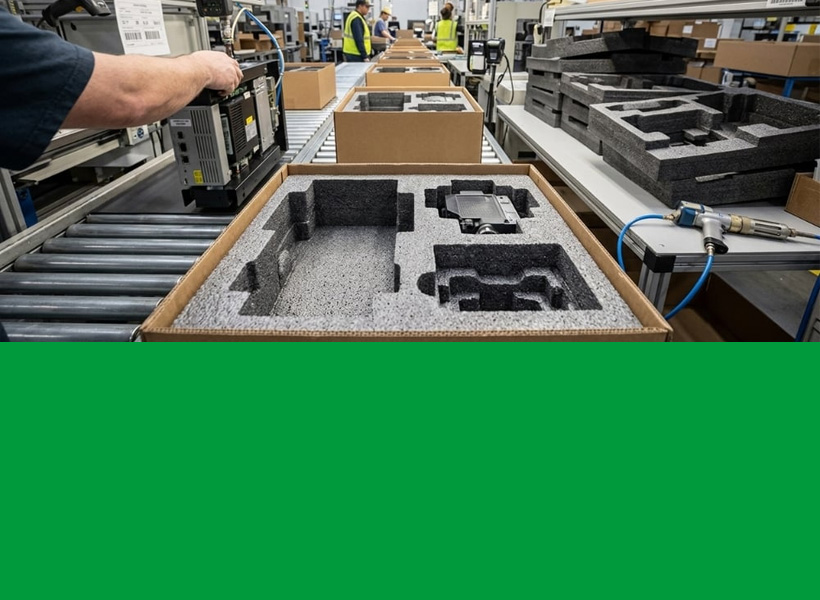
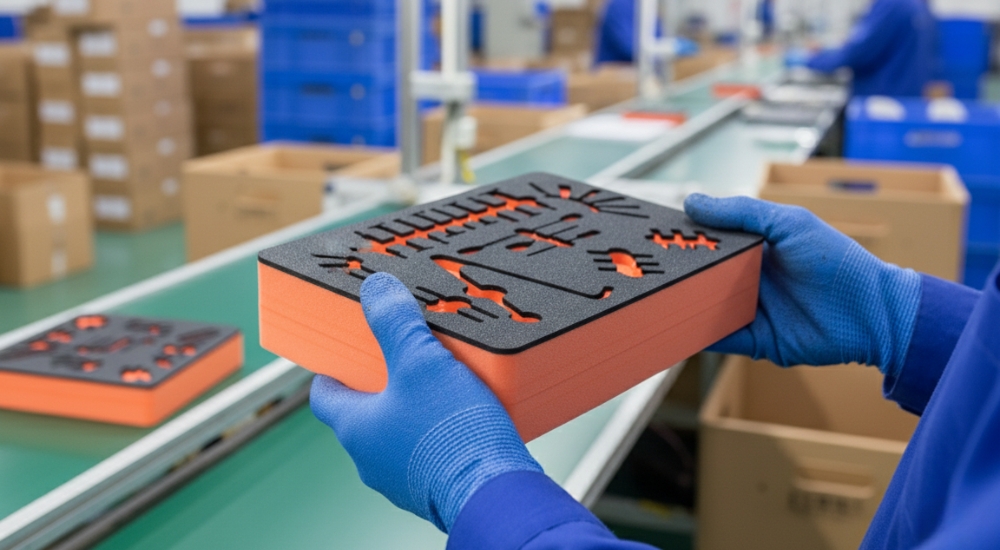
Foam packaging is typically used as packaging inserts, foam end caps, or customer-cut components that fit within an outer pack. It is typically made from materials such as polyethylene (PE) or polyurethane (PU) and is designed to protect products during storage, handling, and transit throughout their lifecycle.
Most foams that are used in packaging are closed-cell materials, meaning they trap air within their structure. This gives them great cushioning properties and allows them to absorb repeated impacts without affecting their performance.
Foam packaging plays a critical role in ensuring your products – from consumer electronics and medical devices to aerospace components and industrial tools – arrive exactly as intended.
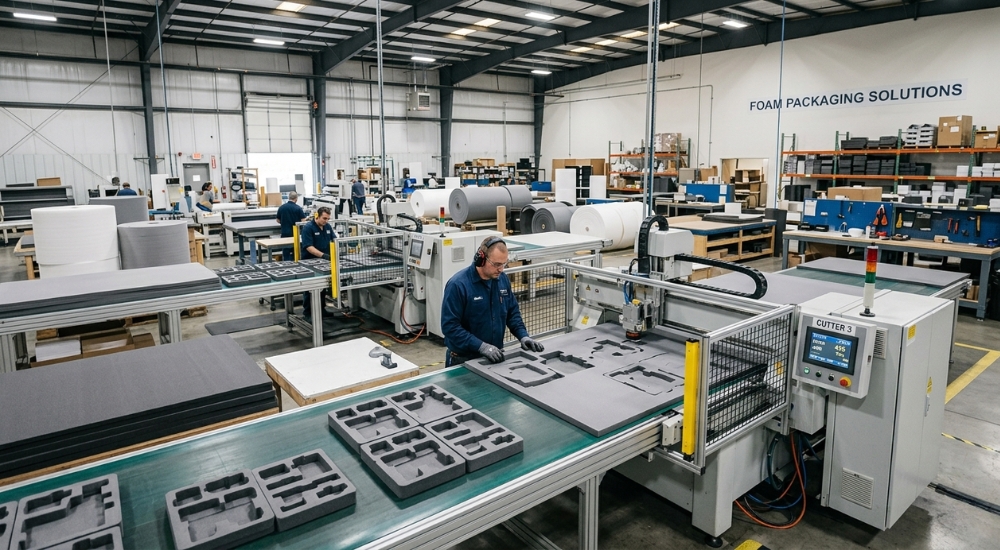
At Polyformes, foam packaging is precision-engineered, meaning inserts are designed to use the minimum material necessary while delivering maximum protection.
Why do businesses choose foam packaging?
Firstly, foam packaging helps protect your high-value, fragile products from damage. A well-designed foam insert can mean the difference between a product arriving in good condition and being returned or replaced.
When you consider the impact on the environment and financial cost of damaged goods – returns, repairs, replacements, and additional transport – foam can actually reduce overall waste.
Secondly, as foam performs so well, less material is often needed overall, leading to smaller outer packaging, improved pallet efficiency, and fewer shipments, ultimately reducing emissions.
Third, another often-overlooked benefit is its reusability. Foam inserts, particularly in returnable transit packaging systems, can last for hundreds of cycles. Even in protective cases, foam can remain functional for years.
Lastly, as foam recycling has become more accessible and grades of foam containing recycled content have become available, it has become a more desirable choice for businesses looking to improve their environmental impact and meet sustainability targets.
Can foam packaging be recycled?
The short answer is yes, but it really depends on the type of foam and how it is handled.
Whether foam can be recycled depends entirely on the specific material:
- Polyethylene (PE) foam (e.g., Plastazote, Stratocell, Ethafoam) is widely recyclable through specialist facilities, where it can be turned into new foam products or other plastic components, provided it is clean and correctly sorted.
- Polyurethane (PU) foam is recyclable through either mechanical or chemical recycling processes, where it’s ground down and reused as insulation or turned into new foam materials.
- Expanded polystyrene (EPS) is technically recyclable but is rarely accepted in standard schemes and usually requires specialist collection and processing.
The recycling process
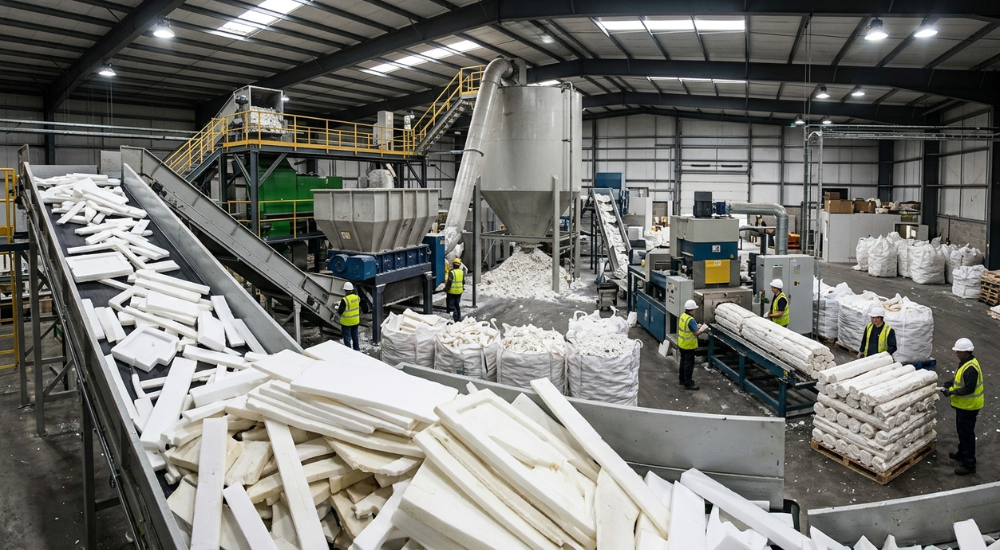
To successfully recycle high-performance foams like polyethene, you must first sort the materials by type. This first step is essential as foams can’t be mixed throughout this process.
Once they have been sorted, the foam is cleaned and compressed into more manageable forms, such as logs or blocks, and then melted down and reprocessed into new products.
Polyurethane foams are recycled using a slightly different process, either chemically or mechanically.
In the mechanical process, it is ground down and reformed into new materials, such as insulation or high-density panels.
In the chemical process, it is broken down into its original components and used to create new foam products.
In some cases, where recycling isn’t doable, polyurethane can also be used for energy recovery, converting waste into heat or electricity.
How do Polyformes support foam recycling?
Here at Polyformes, sustainability is built into our design process from the start.
We focus on creating foam packaging solutions that are not only high-performing but also aligned with your long-term environmental goals. This includes:
- Using recycled-content foams wherever possible.
- Supplying recyclable polyethene and polyurethane materials.
- Designing inserts that are easy to separate and reprocess.
- Reducing materials usage through efficient designs.
- Advising customers on reusability and responsible end-of-life options.
By considering the full lifecycle of the foam packaging that we supply, we help businesses balance protection, performance, and sustainability.
Summary
So, in conclusion, yes, foam packaging can be recycled. However, this depends entirely on using the right materials, systems, and approach.
While challenges remain in foam recycling processes, particularly in the collection and infrastructure surrounding it, foam still remains a highly effective packaging solution. When used thoughtfully, it can reduce damage to your products, support reusability, and even be recycled through specialist channels.
The trick here for businesses is to think beyond just where the materials will end up at the end of their lifecycle. By choosing the right materials, designing for reuse, and working with experienced packaging partners/designers, you can significantly reduce waste production without compromising your products’ protection.
With over 40 years of experience, Polyformes continues to help organisations implement smarter and more sustainable packaging strategies that ensure performance and environmental responsibility go hand in hand, get in touch with our team of experts today.