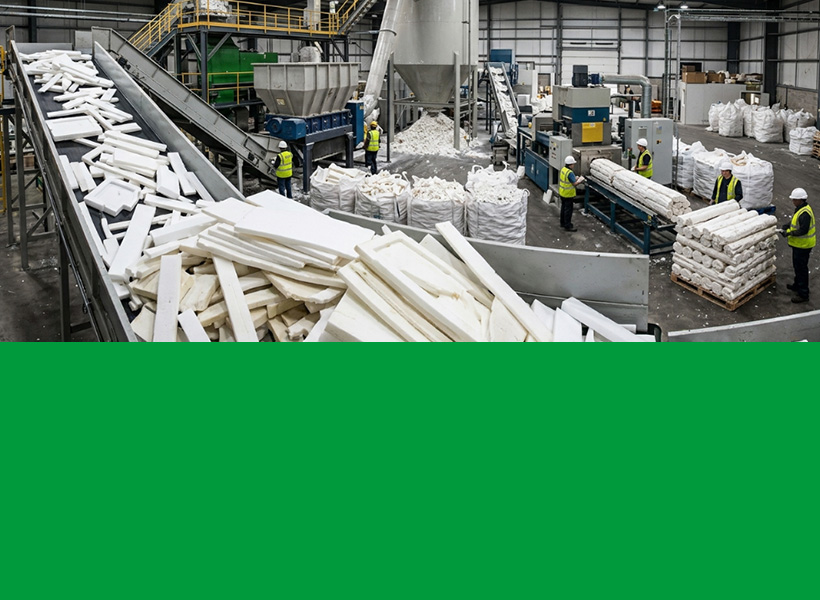
What are foam crane mats?
If your business operates cranes or other heavy-lifting equipment, you’ll know that stability and safety are essential. When you’re working on a construction site, an infrastructure project, a utility installation, or a temporary lifting operation, the ground beneath the machinery plays a big role in maintaining safe working conditions.
Foam crane mats, sometimes referred to as crane pads, outrigger pads, or load distribution pads, are heavy-duty support mats that are placed underneath a crane’s outriggers or stabilisers. Their primary function is to spread the weight of the crane more evenly across the ground to reduce pressure on specific contact points and help prevent the machinery from sinking, shifting, or becoming unstable.
With suitable support beneath the outriggers, the concentrated load from a crane can place enormous pressure on relatively small areas of ground. On soft, uneven, or unstable terrain, this can quickly lead to sinking, instability, or even dangerous lifting conditions.
Foam crane mats are specifically designed to help overcome these challenges.
Contents
What are foam crane mats used for?
Foam crane mats are used anywhere cranes or heavy machinery require additional ground support and load distribution.
Most commonly, they are positioned beneath the crane outriggers to provide a stable, level working platform during lifting operations.
They are frequently used in:
- Construction projects
- Infrastructure and utilities work
- Bridge and rail maintenance
- Excavation projects
- Wind turbine installations
- Temporary lifting operations
- Geographical or environmental works
- Event and festival setups
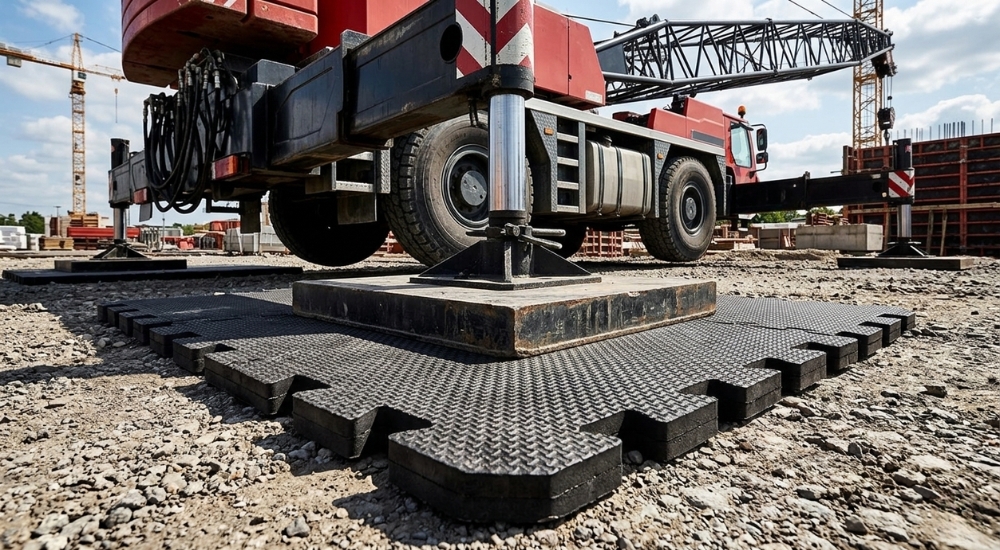
Foam crane mats can support almost any heavy machinery that relies on stable ground conditions, including excavators, loaders, bulldozers, generators, storage units, and temporary structures.
One of their biggest advantages is their ability to work across a wide range of terrains. They can be used on:
- Soft soil
- Gravel
- Grass
- Muddy or boggy ground
- Uneven terrain
- Asphalt and tarmac
- Concrete and paved surfaces
When cranes or heavy machinery are placed on softer ground, especially when working in fields or unfinished construction sites, the supports of the heavy machinery can very quickly begin to sink into the surface, making them very unstable.
Foam crane mats can also help to improve environmental protection. By creating a temporary protective layer between the machinery and the ground, protecting the natural terrain from damaged soil structure, vegetation, and habitats.
What should you consider before sourcing foam crane mats?
Selecting the right crane mats is important because the wrong choice can compromise both safety and performance. Several factors should always be considered before choosing the crane mats you’ll use for a project.
- Size and thickness: The size of the mat will directly affect how it distributes weight, while thickness generally provides a higher load-bearing capacity and better support.
- Ground conditions: Soft or muddy ground might require larger mats, while uneven surfaces might benefit from the foam’s ability to adapt to any inconsistencies in the terrain.
- Weight-bearing requirements: The total load that is being supported should be considered carefully; this includes the crane and the loads that are being lifted, with any dynamic forces that are generated during operation.
- Surface protection needs: If you’re working on finished surfaces, then protecting the ground might be just as important as the crane itself.
What are the benefits of foam crane mats?
Foam crane mats provide some practical benefits that can improve the safety, efficiency, and cost-effectiveness across your lifting operations.
- Lower transportation costs: When compared with steel or timber crane mats, foam mats are much easier to transport between sites and their reduced weight can help reduce fuel consumption, simplify logistics, and reduce the challenges associated with manual handling.
- Protection for delicate surfaces: When working on finished surfaces that need to be protected from damage, foam crane mats help to cushion the pressure from outriggers and heavy machinery and reduce the risk of any cracks, indentations, or structural damage.
- Adaptability on uneven ground: The compressibility of the foam allows the mats to adapt to any small inconsistencies on the ground, helping to create a more stable foundation.
- Excellent durability: High-quality foam crane mats are designed for repeated heavy-duty use, and unlike timber, they don’t rot, splinter or absorb water. They are also resistant to many oils and chemicals, helping to maintain their long-term performance.
- Improved site safety: Foam crane mats help to create safer lifting conditions for operators and nearby workers by improving load distribution and reducing the risk of ground failure.
- Increased efficiency and productivity: Foam crane mats help machinery to operate more efficiently by reducing the risk of sinking or instability, so operators can position equipment more effectively and minimise delays and complete tasks with better confidence.
- Environmental protection: Foam crane mats help to reduce the risk of damage to the natural terrain by limiting ground disturbance and spreading pressure more evenly.
Summary
If you are planning or managing lifting operations, the ground underneath your equipment is just as important as the machinery itself.
Foam crane mats will provide a practical and effective solution for improving stability, protecting surfaces, and supporting safer operations.
By combining lightweight handling with impressive load distribution capability, they offer a versatile alternative to traditional timber or steel crane mats, particularly where transport efficiency, surface protection, and adaptability matter the most.
Whether you’re working on soft or solid ground, uneven terrain, paved surfaces, or sensitive environments, foam crane mats help to create a safer and more reliable lifting operation.
If you’re looking for high-capacity foam crane mats, get in touch with our team of experts at Polyformes, one of the UK’s leading industrial foam suppliers, manufacturers, and converters, supplying protective foam solutions to a wide range of industries for more than 40 years.